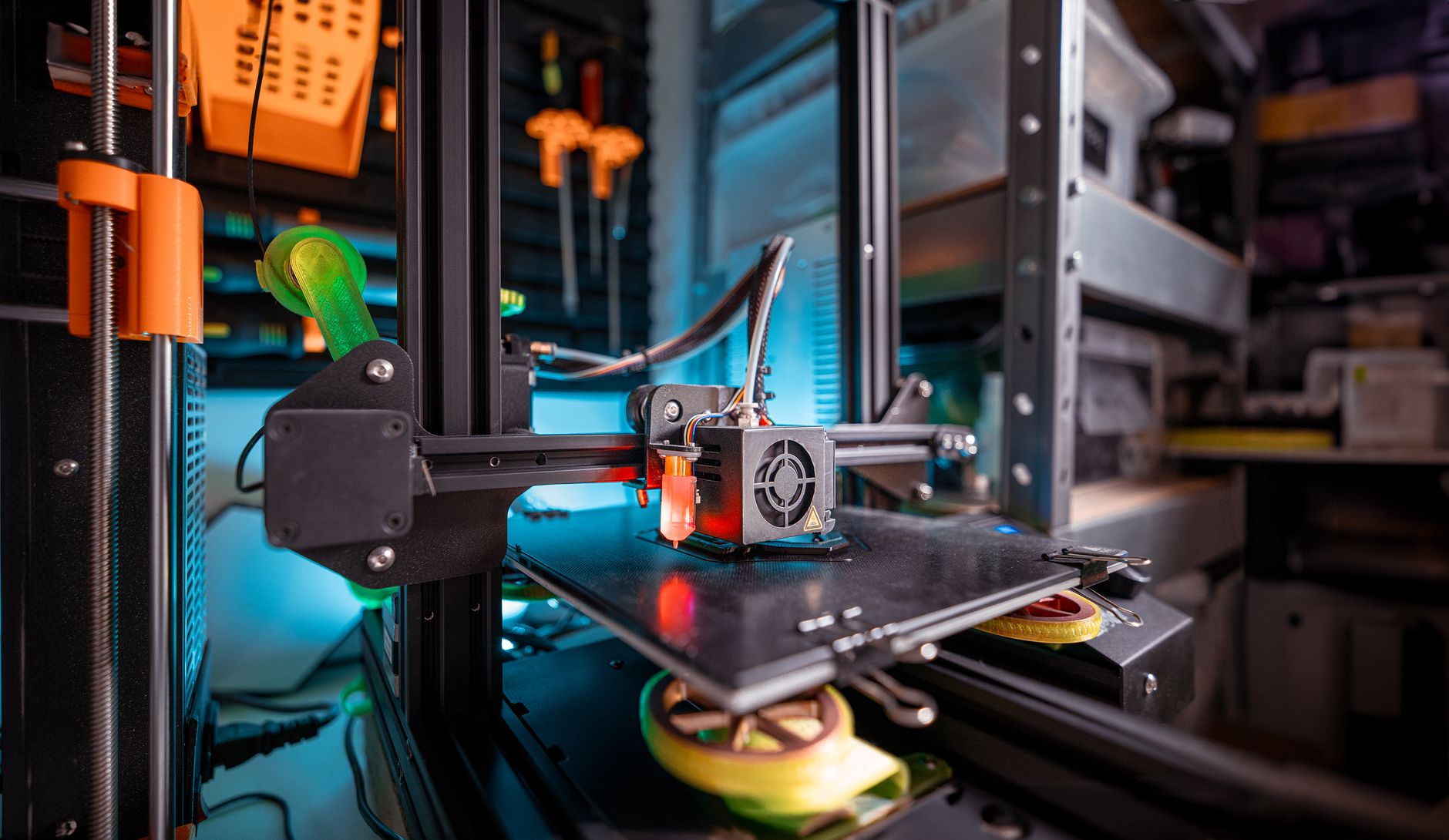
Today, you can snag the cheapest 3D printer for about $130 shipped. That’s pretty incredible when you think back to paying $800 for something similar just five years ago. Brands like Bambu, Creality, and Elegoo have really disrupted the entry-level market, which is great. Still, some of these budget options can end up being money pits due to issues like failed prints, warped beds, and the need for replacement parts.
I’ve spent time with several of these printers and heard enough from beginners about their experiences. This guide cuts to the chase, highlighting which machines are worth your time, the specs to look for, and what it actually costs to keep one running smoothly.
Top Affordable 3D Printers
Each of these five options is under $200 at standard retail prices. They all come equipped with some form of auto-leveling or assisted-leveling feature, which can really help first-timers.
| Model | Price (approx.) | Build Volume | Warranty |
|---|---|---|---|
| Creality Ender 3 V3 SE | $139 | 220 × 220 × 250 mm | 1 year |
| Elegoo Neptune 4 | $159 | 225 × 225 × 265 mm | 1 year |
| Anycubic Kobra 2 | $169 | 220 × 220 × 250 mm | 1 year |
| Creality Ender 3 S1 | $179 | 220 × 220 × 270 mm | 1 year |
| Elegoo Neptune 3 Pro | $155 | 225 × 225 × 280 mm | 1 year |
All these models come with a one-year warranty, which is pretty standard for Chinese-brand printers in this price range. I’ve noticed that Creality’s support has improved quite a bit. Elegoo offers decent support too, but waiting a couple of weeks for a replacement part from overseas is possible.
Key Features to Consider
People tend to focus on build volume, but at this price, bed adhesion and frame stability matter more. A build volume of 220 × 220 mm is generally ample for hobby projects. The real trouble for beginners lies in a shaky Z-axis or a bed that won’t stay level after a few uses.
Auto-leveling quality
The Ender 3 V3 SE features a strain-gauge sensor that’s surprisingly accurate. This is a nice upgrade from the CR Touch knockoffs you’ll find on older budget models. The Kobra 2 has a similar system. Both will save you headaches during your first week.
Print speed
The Neptune 4 claims to hit 500 mm/s, but honestly, I’d run it at 200-250 mm/s for structural prints. Quick speeds on cheaper frames often lead to ringing artifacts, those annoying wavy surfaces on curves. So, set your expectations right.
Print Quality and Performance
Budget doesn’t have to mean bad prints. The Ender 3 V3 SE can achieve layer heights of 0.1 mm that look really clean. However, these machines often struggle with consistency on longer prints, say eight hours or so. Cheap hotends can cause under-extrusion, which can be frustrating to fix.
When it comes to PLA, all five models do well. PETG is also workable. TPU can be hit or miss, depending on the extruder design; the direct-drive setups on the Neptune 4 and Kobra 2 tend to handle flexible filament better than the Ender 3 S1’s semi-direct system. ABS is feasible, but these printers really aren’t designed for it—warping is a never-ending battle without an enclosure.
User Reviews and Ratings
On sites like Amazon and maker forums, the Ender 3 V3 SE holds about 4.4 out of 5 stars from thousands of reviews. Most users rave about its setup speed and the consistency of the first layer. The Neptune 4 receives similar praise, but some users complain about firmware quirks right out of the box. Typically, people praise the Kobra 2 for its speed while critiquing the slicer software—something I can agree with.
I often see reviews where people blame the printer, but it’s often a slicer or filament issue. Factors like wet filament or improper temperature settings lead to more failed prints than hardware defects at this price. If you keep your spools in a dry box, most “bad printer” complaints tend to vanish.
Best Picks for Budget Printers
Finding the cheapest 3D printer that won’t make you want to toss it out the window usually means spending around $140-170 instead of snagging the absolute cheapest model at $99. That additional $30-40 gets you better auto-leveling and a direct-drive extruder, significantly easing the learning curve. Running costs are pretty low: PLA filament averages $18-22 per kilogram, and electricity at typical speeds costs around $0.05-0.10 per hour based on your local rate. A basic 20-gram print runs you well under $0.50 in materials.
If I were to recommend a model for beginners, the Ender 3 V3 SE would be my choice. It’s not perfect; the screen’s a bit small and cable management could be better. Still, you can’t argue with the print quality for the price. However, if speed is important for you, consider the Neptune 4—it’s worth that extra $20.
FAQs
What is the cheapest 3D printer?
The Creality Ender 3 V3 SE at around $139 is the most reliable option at the bottom of the market; some no-name models go lower but aren’t worth the risk.
How much does it cost to run a 3D printer?
Electricity runs roughly $0.05-0.10 per hour, and PLA filament costs about $18-22 per kilogram, so most small prints cost under a dollar in total.
Are budget 3D printers reliable?
Generally yes for PLA printing, though quality control varies by batch; buying from brands like Creality or Elegoo gives you better support than off-brand options.